
IELTS Speaking Part 1 – Pets
IELTS Speaking Practice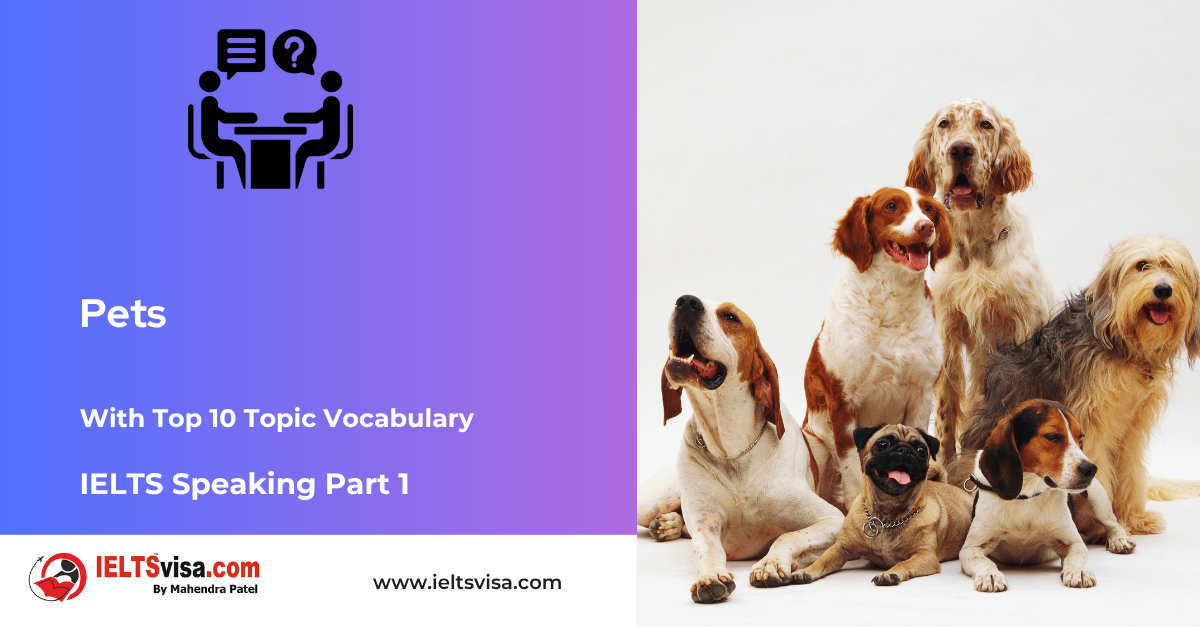
IELTS Speaking Part 1 – Pets
Examiner: Do you have any pets?
Candidate: (Yes/No) I (do/don’t) currently have any pets. (If yes) I have a (mention type of pet) named (mention pet’s name). (If no) I’ve always loved animals, but unfortunately, my lifestyle (explain why you don’t have pets, e.g., doesn’t allow for a pet/requires frequent travel).
Examiner: What kind of pets do people typically have in your country?
Candidate: The most common pets in my country are (mention the most popular pets). However, there’s a growing trend of people keeping more exotic pets like (mention some less common pets).
Examiner: Why do you think people keep pets?
Candidate: People keep pets for many reasons. They can provide companionship and reduce feelings of loneliness. Pets can also be a source of joy and amusement; caring for them can teach responsibility. Additionally, some pets offer practical benefits, like dogs providing security or assistance animals aiding people with disabilities.
Examiner: Have you ever had a pet as a child?
Candidate: Yes, I grew up with (mention type of pet). It was a wonderful experience that taught me responsibility and the importance of caring for another living being. We had many adventures together, and I have fond memories of (mention a specific positive memory).
Examiner: What do you think are the most important qualities of a good pet owner?
Candidate: Responsible pet ownership requires commitment and care. A good pet owner provides their pet with proper food, shelter, and veterinary care. Additionally, they dedicate time to playing, training, and socializing their pet to ensure its well-being and happiness.
Examiner: Do you think some pets are easier to care for than others?
Candidate: Absolutely! Low-maintenance pets, like (mention examples) require less specific care than pets with more complex needs, like (mention examples). Choosing a pet that aligns with your lifestyle and ability to dedicate time is crucial.
Examiner: Have you ever considered adopting a pet from a shelter?
Candidate: Absolutely! Animal shelters are filled with loving animals in need of a home. Adopting a pet from a shelter gives a deserving animal a second chance and provides you with a loyal companion.
Examiner: Do you think keeping pets in apartments is a good idea?
Candidate: It can be! Many factors need to be considered, like the size of the apartment, the type of pet, and your ability to provide them with sufficient exercise. High-energy dogs might need more space than smaller animals or those with lower activity levels.
Examiner: Do you think pets can help improve people’s health?
Candidate: Studies suggest that owning pets can have positive health benefits. Caring for a pet can encourage regular walks or playtime, leading to increased physical activity. The companionship of pets can also reduce stress and lower blood pressure, contributing to overall well-being.
Examiner: Are there any downsides to keeping pets?
Candidate: There can be! Pets require financial responsibility for food, vet bills, and the potential damage they might cause. Additionally, they take time and commitment to train and provide daily care. Being aware of these downsides is crucial before getting a pet.
Examiner: Do you think owning a pet can teach children valuable life lessons?
Candidate: Indeed! Having a pet fosters responsibility in children as they learn to care for another living creature. Pets can also teach empathy and compassion as children develop a bond with their furry friends. In addition, caring for a pet can instil valuable lessons about routine, commitment, and the importance of cleanliness.
Examiner: Do you think some breeds of dogs or cats are better suited for families with children?
Candidate: Some breeds are known for being patient, gentle, and playful, making them excellent companions for children. Golden retrievers, Labradors, and certain breeds of cats like Persians or Maine Coons are often cited as good family pets. However, temperament and proper training are crucial regardless of breed.
Examiner: Are there any cultural differences in how people view pets around the world?
Candidate: Definitely! In some cultures, pets are seen primarily as working animals, while in others, they’re considered cherished members of the family. Cultural beliefs and traditions can influence pet ownership practices, from specific breeds considered auspicious to animal dietary customs.
Examiner: Do you think technology has changed the way we care for our pets?
Candidate: Technology offers new tools for pet care. Smart feeders and water dispensers ensure proper nourishment even when you’re away. GPS trackers for adventurous pets provide peace of mind. Video calls allow you to stay connected with your furry friend while travelling.
Examiner: Do you think pets can help people feel less lonely?
Candidate: Absolutely! Pets offer companionship and unconditional love, which can be a powerful antidote to loneliness. Caring for a pet provides a sense of purpose and routine, reducing feelings of isolation. The presence of a furry friend can be incredibly comforting. It can lessen feelings of loneliness, especially for people living alone.
Top 10 Topic Vocabulary for “Pets”
|
Vocabulary |
Type |
Meaning |
Synonyms |
Antonyms |
Word Family |
Example Sentences |
|
Companionship |
Noun |
The state of spending time with someone and enjoying their company |
Friendship, Company |
Isolation, Loneliness |
Companion (n), companionship (n) |
Pets provide companionship and reduce feelings of loneliness. |
|
Responsibility |
Noun |
The state or fact of having a duty to deal with something |
Duty, Obligation |
Irresponsibility, Neglect |
Responsible (adj), Responsibly (adv) |
Having a pet fosters responsibility in children. |
|
Exotic |
Adjective |
Originating in or characteristic of a distant foreign country |
Unusual, Foreign |
Common, Ordinary |
Exoticism (n), Exoticize (v) |
There’s a growing trend of people keeping more exotic pets. |
|
Veterinary |
Adjective |
Relating to the medical care and treatment of animals |
Animal medical, pet medical |
N/A |
Veterinarian (n), Veterinarian (n) |
A good pet owner provides their pet with proper veterinary care. |
|
Adoption |
Noun |
The action or fact of adopting or being adopted |
Taking in, Fostering |
Abandonment, Rejection |
Adopt (v), Adoptive (adj) |
Adopting a pet from a shelter gives a deserving animal a second chance. |
|
Shelter |
Noun |
A place giving temporary protection from bad weather or danger |
Refuge, Haven |
Exposure, Danger |
Sheltered (adj), Sheltering (v) |
Animal shelters are filled with loving animals in need of a home. |
|
Low-maintenance |
Adjective |
Requiring little work to keep in good condition |
Easy-care, Undemanding |
High-maintenance, Demanding |
Maintenance (n), Maintain (v) |
Low-maintenance pets require less specific care. |
|
Temperament |
Noun |
A person’s or animal’s nature, especially as it affects their behaviour |
Disposition, Nature |
N/A |
Temperamental (adj), Tempered (adj) |
Some breeds are known for their patient and gentle temperament. |
|
Loneliness |
Noun |
Sadness because one has no friends or company |
Solitude, Isolation |
Companionship, Togetherness |
Lonely (adj), Lonelier (adj) |
Pets offer companionship and can help alleviate loneliness. |
|
Financial |
Adjective |
Relating to money or how money is managed |
Monetary, Economic |
N/A |
Finance (n), Financially (adv) |
Pets require financial responsibility for food and vet bills. |


Our Books

Master IELTS Speaking Part 1
IELTS Writing Task 1 Book
IELTS Writing Task 2 Book
Practice IELTS Other Modules
IELTS Listening
The IELTS Listening test assesses how well you can understand spoken English in various contexts. It lasts about 30 minutes and is divided into four sections with a total of 40 questions. The listening tasks become increasingly difficult as the test progresses.
IELTS Academic Reading
The IELTS Academic Reading section assesses your ability to understand and interpret a variety of texts in academic settings. It is designed to evaluate a range of reading skills, including skimming for gist, reading for main ideas, reading for detail, understanding inferences, and recognizing a writer's opinions and arguments.
IELTS Speaking
The IELTS Speaking test assesses your ability to communicate in English on everyday topics. It lasts 11-14 minutes and consists of three parts: introduction, cue card, and a discussion based on the cue card topic.
IELTS General Reading
IELTS General Reading tests your ability to understand and interpret various types of texts. Here are some key areas and types of content you can expect to encounter in the reading section, along with tips for effective preparation.
IELTS Academic Writing Task 1
In IELTS Academic Writing Task 1, you are presented with a visual representation of information, such as graphs, charts, tables, or diagrams, and you are required to summarize, compare, or explain the data in your own words.
IELTS General Writing Task 1
In IELTS General Writing Task 1, you are required to write a letter based on a given situation. The letter can be formal, semi-formal, or informal, depending on the prompt. Here’s a breakdown of the key components to include in your letter
IELTS Academic Writing Task 2
In IELTS Academic Writing Task 2, you are required to write an essay in response to a question or topic. Here’s a guide to help you understand the essential elements of this task
IELTS Exam Tips
To succeed in the IELTS exam, practice regularly, familiarize yourself with the test format, improve your vocabulary, develop time management skills, and take mock tests to build confidence.
Grammer for IELTS
Grammar is the foundation of effective communication in English. Understanding tense usage, subject-verb agreement, and sentence structure enhances clarity and coherence in writing and speaking.
Vocabulary for IELTS
Vocabulary plays a crucial role in the IELTS (International English Language Testing System) exam, especially in the Speaking and Writing sections. Here’s an overview of why vocabulary is important and how it impacts your performance
RECENT IELTS SAMPLES QUESTIONS AND ANSWERS
IELTS Speaking Part 1 – Favourite Sujbect – Physics
IELTS Speaking Part 1 - Favourite Sujbect - Physics Q: What is your favourite subject? A: My favourite subject...
IELTS Speaking Part 1 – Present Situation (Student)
IELTS Speaking Part 1 - Present Situation (Student) Q1: Are you a student or do you work?A: I’m a full-time...

IELTS Speaking Part 1 – Present Situation – Employee – as an International Student and Social Worker
IELTS Speaking Part 1 - Present Situation - Employee - as an International Student and Social Worker Q1: Are...

IELTS Speaking Part 1 – Persent Situation – Employee- as an Electric Engineer
IELTS Speaking Part 1 - Persent Situation - Employee- as an Electric Engineer Q1: What do you do for a...

IELTS Speaking Part 1 – Persent Situation – Employee – as an Software Engineer
IELTS Speaking Part 1 - Persent Situation - Employee - as an Software Engineer Q1: What do you do for a...

IELTS Speaking Part 1 – Persent Situation – Married
IELTS Speaking Part 1 - Persent Situation - Married Q1: Are you married?A: Yes, I am married. My spouse and I...
Our IT Company Services