
Oxytocin Reading Answers
IELTS Academic Reading Passage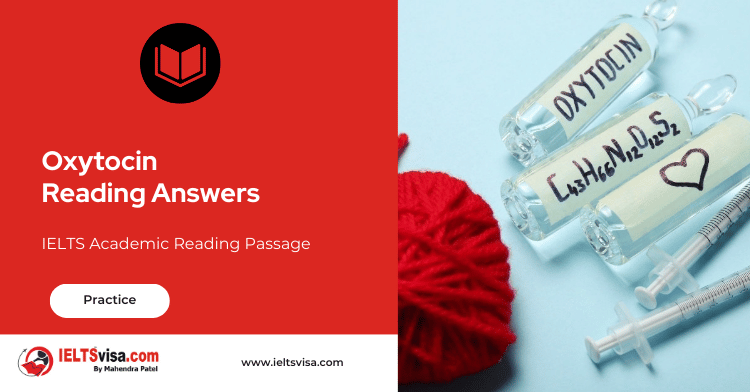
The positive and negative effects of the chemical known as the ‘love hormone’
A. Oxytocin is a chemical, a hormone produced in the pituitary gland in the brain. It was through various studies focusing on animals that scientists first became aware of the influence of oxytocin. They discovered that it helps reinforce the bonds between prairie voles, which mate for life, and triggers the motherly behaviour that sheep show towards their newborn lambs. It is also released by women in childbirth, strengthening the attachment between mother and baby. Few chemicals have as positive a reputation as oxytocin, which is sometimes referred to as the ‘love hormone’. One sniff of it can, it is claimed, make a person more trusting, empathetic, generous and cooperative. It is time, however, to revise this wholly optimistic view. A new wave of studies has shown that its effects vary greatly depending on the person and the circumstances, and it can impact on our social interactions for worse as well as for better.
B. Oxytocin’s role in human behaviour first emerged in 2005. In a groundbreaking experiments, Markus Heinrichs and his colleagues at the University of Freiburg, Germany, asked volunteers to do an activity in which they could invest money with an anonymous person who was not guaranteed to be honest. The team found the participants who had sniffed oxytocin via a nasal spray beforehand invested more money than those who received a placebo instead. The study was the start of research into the effects of oxytocin on human interactions. ‘For eight years, it was quite a lonesome field,’ Heinrichs recalls. ‘Now, everyone is interested.’ These follow-up studies have shown that after a sniff of the hormone, people become more charitable, better at reading emotions on others’ faces and at communicating constructively in arguments. Together, the results fuelled the view that oxytocin universally enhanced the positive aspects of our social nature.
C. Then, after a few years, contrasting findings began to emerge. Simone Shamay-Tsoory at the at the University of Haifa, Israel, found that when volunteers played a competitive game, those who inhaled the hormone showed more pleasure when they beat other players, and felt more envy when others won. What’s more, administering oxytocin also has sharply contrasting outcomes depending on a person’s disposition. Jennifer Bartz from Mount Sinai School of Medicine, New York, found that it improves people’s ability to read emotions, but only if they are not very socially adept to begin with. Her research also shows that oxytocin in fact reduces cooperation in subjects who are particularly anxious or sensitive to rejection.
D. Another discovery is that oxytocin’s effects vary depending on who we are interacting with. Studies conducted by Carolyn DeClerck of the University of Antwerp, Belgium, revealed that people who had received a dose of oxytocin actually became less cooperative when dealing with complete strangers. Meanwhile, Carsten De Dreu at the University of Amsterdam in the Netherlands discovered that volunteers given oxytocin showed favouritism: Dutch men became quicker to associate positive words with Dutch names than with foreign ones, for example. According to De Dreu, oxytocin drives people to care for those in their social circles and defend them from outside dangers. So, it appears that oxytocin strengthens biases, rather than promoting general goodwill, as was previously thought.
E. There were signs of these subtleties from the start. Bartz has recently shown that in almost half of the existing research results, oxytocin influenced only certain individuals or in certain circumstances. Where once researchers took no notice of such findings, now a more nuanced understanding of oxytocin’s effects is propelling investigations down new lines. To Bartz, the key to understanding what the hormone does lies in pinpointing its core function rather than in cataloguing its seemingly endless effects. There are several hypotheses which are not mutually exclusive. Oxytocin could help to reduce anxiety and fear. Or it could simply motivate people to seek out social connections. She believes that oxytocin acts as a chemical spotlight that shines on social clues – a shift in posture, a flicker of the eyes, a dip in the voice – making people more attuned to their social environment. This would explain why it makes us more likely to look others in the eye and improves our ability to identify emotions. But it could also make things worse for people who are overly sensitive or prone to interpreting social cues in the worst light.
F. Perhaps we should not be surprised that the oxytocin story has become more perplexing. The hormone is found in everything from octopuses to sheep, and its evolutionary roots stretch back half a billion years. ‘It’s a very simple and ancient molecule that has been co-opted for many different functions,’ says Sue Carter at the University of Illinois, Chicago, USA. ‘It affects primitive parts of the brain like the amygdala, so it’s going to have many effects on just about everything.’ Bartz agrees. ‘Oxytocin probably does some very basic things, but once you add our higher-order thinking and social situations, these basic processes could manifest in different ways depending on individual differences and context.’
Questions 14-17
Reading Passage has six section, A-F.
Which paragraph contains the following information?
Write the correct letter, A-F, in boxes 14-17 on your answer sheet.
NB You may use any letter more than once.
List of Researchers
A. Markus Heinrichs
B. Simone Shamay-Tsoory
C. Jennifer Bartz
D. Carolyn DeClerck
E. Carsten De Dreu
F. Sue Carter
14. reference to research showing the beneficial effects of oxytocin on people
15. reasons why the effects of oxytocin are complex
16. mention of a period in which oxytocin attracted little scientific attention
17. reference to people ignoring certain aspects of their research data
Questions 18-20
Look at the following research findings (Questions 18-20) and the list of researchers below.
Match each research finding with the correct researcher, A-F.
Write the correct letter, A-F, in boxes 18-20 on your answer sheet.
18. People are more trusting when affected by oxytocin.
19. Oxytocin increases people’s feelings of jealousy.
20. The effect of oxytocin varies from one type of person to another.
Questions 21-26
Complete the summary below.
Choose ONE WORD ONLY from the passage for each answer.
Write your answers in boxes 21-26 on your answer sheet.
Oxytocin research
The earliest findings about oxytocin and bonding came from research involving 21……………………….. It was also discovered that humans produce oxytocin during 22………………………… An experiment in 2005, in which participants were given either oxytocin or a 23…………………………, reinforced the belief that the hormone had a positive effect.
However, later research suggests that this is not always the case. A study at the University of Haifa where participants took part in a 24……………………….. revealed the negative emotions which oxytocin can trigger. A study at the University of Antwerp showed people’s lack of willingness to help 25………………………. while under the influence of oxytocin. Meanwhile, research at the University of Amsterdam revealed that people who have been given oxytocin consider 26……………………….. that are familiar to them in their own country to have more positive associations than those from other cultures.

Solution For: Oxytocin
Reading Answers
| 14 – B | 21 – animals |
| 15 – F | 22 – childbirth |
| 16 – B | 23 – placebo |
| 17 – E | 24 – game |
| 18 – A | 25 – strangers |
| 19 – B | 26 – names |
| 20 – C |
Review and Practice
- Regularly practice with IELTS reading samples and time yourself to get used to the pressure of the exam.
- Review your mistakes to understand where you went wrong and how to avoid similar errors in the future.
Our Books

Master IELTS Speaking Part 1
IELTS Writing Task 1 Book
IELTS Writing Task 2 Book
Oxytocin Reading Answers Explanation
Comin Soon
Practice IELTS Other Modules
IELTS Listening
The IELTS Listening test assesses how well you can understand spoken English in various contexts. It lasts about 30 minutes and is divided into four sections with a total of 40 questions. The listening tasks become increasingly difficult as the test progresses.
IELTS Academic Reading
The IELTS Academic Reading section assesses your ability to understand and interpret a variety of texts in academic settings. It is designed to evaluate a range of reading skills, including skimming for gist, reading for main ideas, reading for detail, understanding inferences, and recognizing a writer's opinions and arguments.
IELTS Speaking
The IELTS Speaking test assesses your ability to communicate in English on everyday topics. It lasts 11-14 minutes and consists of three parts: introduction, cue card, and a discussion based on the cue card topic.
IELTS General Reading
IELTS General Reading tests your ability to understand and interpret various types of texts. Here are some key areas and types of content you can expect to encounter in the reading section, along with tips for effective preparation.
IELTS Academic Writing Task 1
In IELTS Academic Writing Task 1, you are presented with a visual representation of information, such as graphs, charts, tables, or diagrams, and you are required to summarize, compare, or explain the data in your own words.
IELTS General Writing Task 1
In IELTS General Writing Task 1, you are required to write a letter based on a given situation. The letter can be formal, semi-formal, or informal, depending on the prompt. Here’s a breakdown of the key components to include in your letter
IELTS Academic Writing Task 2
In IELTS Academic Writing Task 2, you are required to write an essay in response to a question or topic. Here’s a guide to help you understand the essential elements of this task
IELTS Exam Tips
To succeed in the IELTS exam, practice regularly, familiarize yourself with the test format, improve your vocabulary, develop time management skills, and take mock tests to build confidence.
Grammer for IELTS
Grammar is the foundation of effective communication in English. Understanding tense usage, subject-verb agreement, and sentence structure enhances clarity and coherence in writing and speaking.
Vocabulary for IELTS
Vocabulary plays a crucial role in the IELTS (International English Language Testing System) exam, especially in the Speaking and Writing sections. Here’s an overview of why vocabulary is important and how it impacts your performance
RECENT IELTS SAMPLES QUESTIONS AND ANSWERS
Walking with dinosaurs
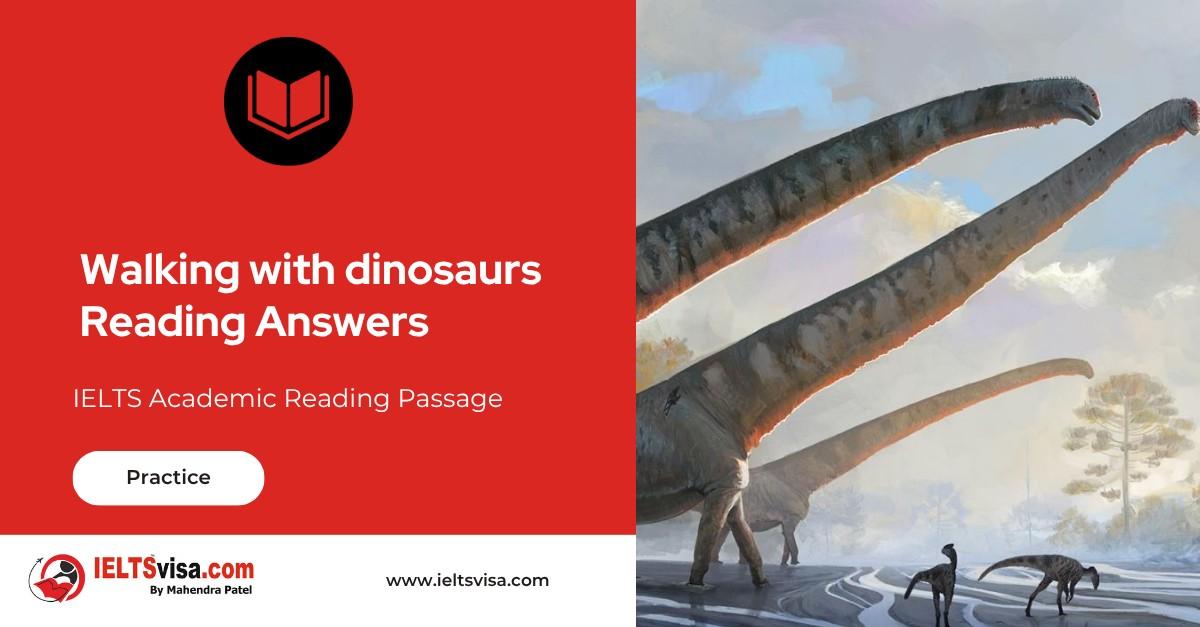
Peter L. Falkingham and his colleagues at Manchester University are developing techniques that...
Money as the Unit of Amount Reading Answers
The most difficult aspect of money to understand is its function as a unit of account. In...

WEATHERING IN THE DESERT
In the deserts, as elsewhere, rocks at the earth's surface are changed by weathering, which...
Nature on Display in American Zoos
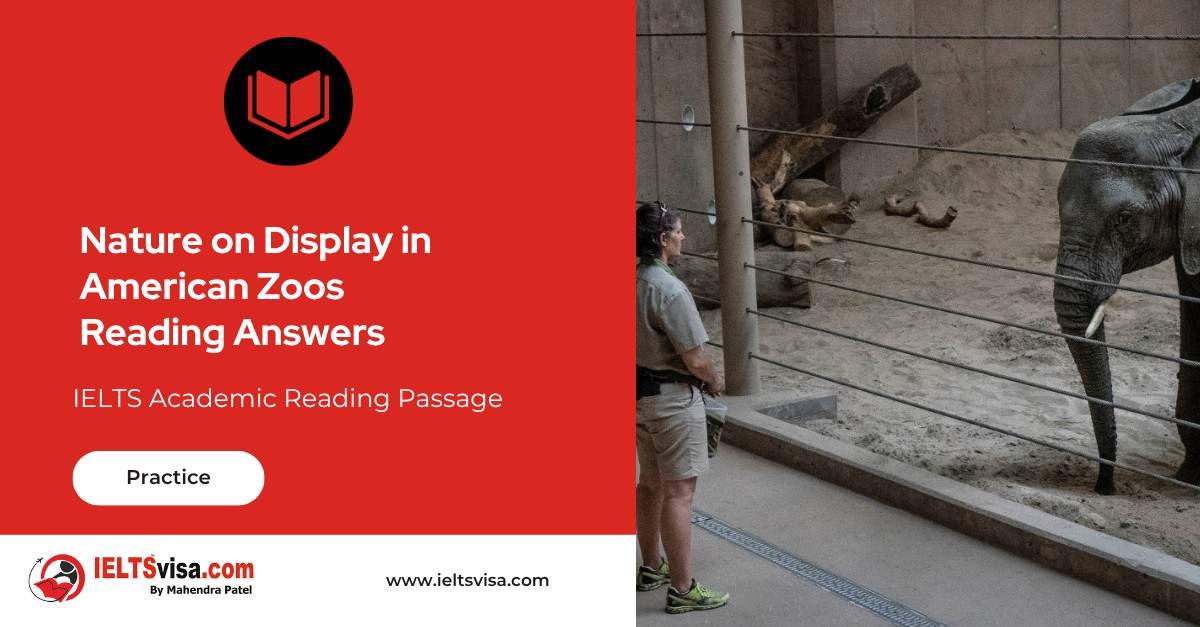
The first zoo in the United States opened in Philadelphia in 1874, followed by the Cincinnati...
Can We Prevent the Poles From Melting
Such is our dependence on fossil fuels, and such is the volume of carbon dioxide we have...
Air conditioning the earth reading answers
The circulation of air in the atmosphere is activated by convection, the transference of heat...
Our IT Company Services